
CULTIVATING LEADERSHIP - BECOMING A GARDENER
In organizations, connections often occur chaotically, and they multiply in profusion. In the plans of hierarchical organizations connections typically occur ‘officially’ only in one place and in two directions, up to one’s immediate supervisor, and down to one’s nearest subordinate. This creates a chain of command, within the exclusive lines of a hierarchy.
If employees feel thwarted within these arrangements, they usually find a way around it. They either compromise these hierarchical impositions, leading people within the organization to overlook certain institutional breaches in favor of a preferred communal good, or they move underground where they find other, less noticeable places of connectivity.
Culture
COVID-19 reminded us that organizational culture is made up of interconnecting circles of complex human activity. Organizations are patterns of energy, webs of human relationships, conversations and decisions.
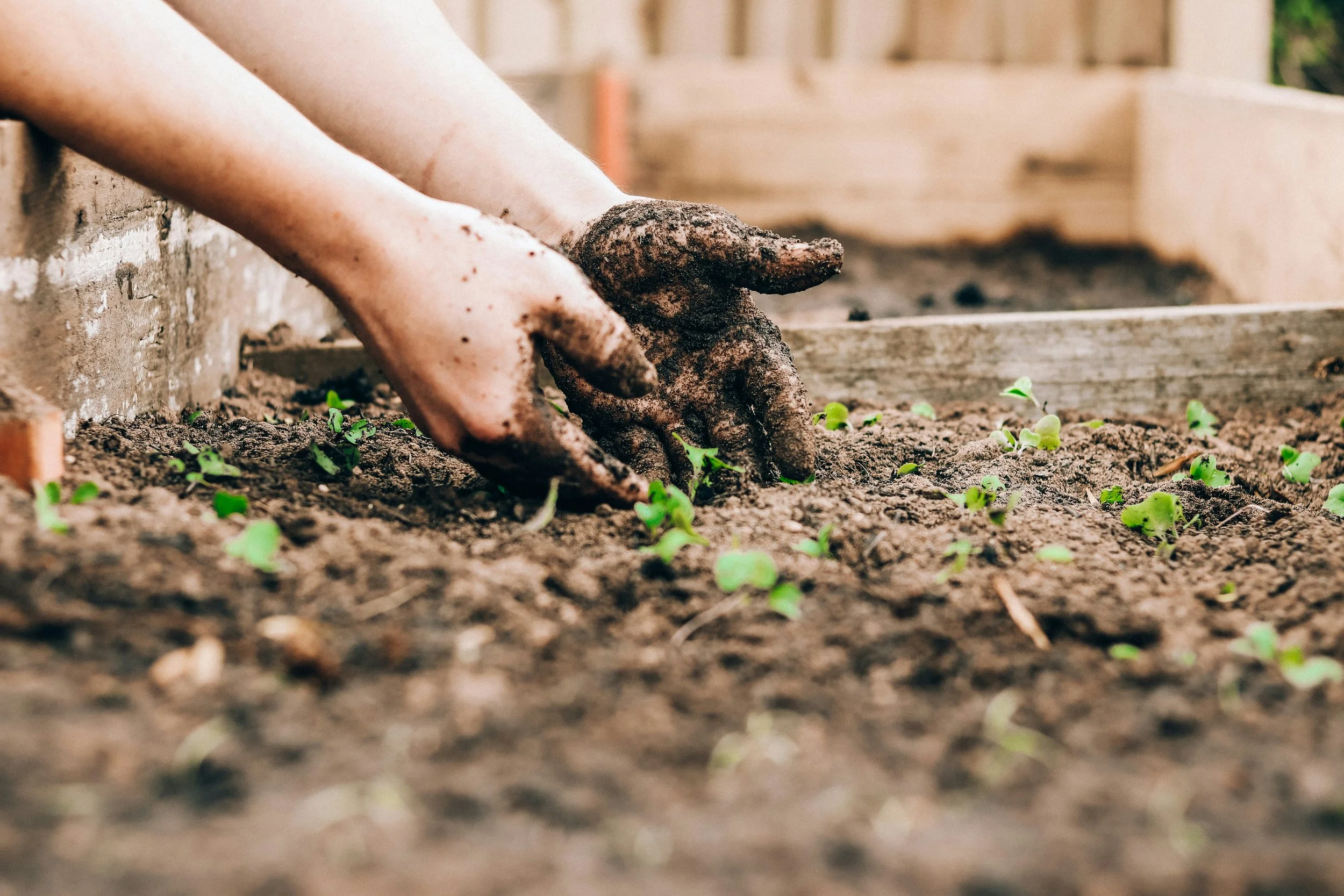
The word ‘culture’ is derived from the word for agricultural cultivation. Cultivation of the soil to produce requires time and attention, nurturing, protection, patience, understanding and preparedness for environmental change.
Like in agriculture usage of the best quality seed, sapling or plant does not yield the desired result if the environment is not right for its growth. It’s not always about the seed. It's also the soil! Investing into the wholesome health of the ecosystem and each living organism will enable each organism to live and grow at its fullest. Environment makes all the difference.
Similarly, in organizations same person performs differently in different environments. Creating an environment which is based on respect and trust, where people willingly give their best irrespective of the challenges guarantees is a primary job of a leader.
Insights From a Flower Garden
Every flower garden requires different grades of soil, and every person requires different environmental stimulus and support.
There is ample post COVID-19 transformational insight to be gained from nature itself. For instance, a flower garden consists of flowers that vary in color, size, shape, height, texture, and smell and they perform varied functions in the ecosystem. If we look more closely, we see the flowers are held up by a structure of stems that reach from the shadow of the earth to the light of day. What we do not see is the real source of structural integrity: the root systems hidden below the surface of the soil. In the garden with its roots, everything, is tied to and essentially is part of the garden itself.
How does this relate to your organization and its systems? Unfortunately, in many hierarchical institutions the only thing that matters is the essence, the center, the apex of the organization.
The flower garden is like the formal structure of an organization; it is a containing vessel. Inspiring others is like planting seeds and watching them grow. The future harvest is what you plant, reap and sow. If the content, the actual culture itself, is not provided with the proper nourishment, the contents will decay or at best produce mediocre results. Without proper maintenance, the flowerbed will grow in every direction and out of control. All future growth will be left to chance. If the foundation of the vessel is neglected, the entire system will collapse.
Every Seed Planted Has Potential
Every seed planted in the flower garden has potential. Sadly, not every employee has an opportunity to reach potential because the spirit within has not been recognized, and its possibility is still unclear. Leaders have a responsibility to engage with that potential and create organizational supports that recognize limitless individual and collective opportunities.
To enable the natural and organic elements of an organization to foster change, sustenance must be on offer. Flowers start as seeds with certain knowledge of how to be flowers. It is the soil (environment) that nurtures and sustains them to grow into beautiful flowers. We are just the same; requiring nurturing environments to learn and grow.
Sometimes the flower needs a trim! Sometimes for us to blossom is necessary to change our own beliefs and our own behavior. If you want to change the environment, start from the inside out. Don’t let your own misplaced assumptions (weeds) takeover and send a signal to the flowers to just give up. Not all leaders recognize weeds, they often disguise them as a flower, and it doesn't matter how much nutrition is put in the soil to feed the roots the head of the weed gets bigger and kills off the flowers and the organization.
If organizations and systems are a living human system—ecology of overlapping, interpenetrating relational spheres—then leadership may be defined as shaping ‘life-enhancing’ conditions.
Grounded Leadership
An experienced gardener will always be on the lookout for sprouting weeds. They know weeds can potentially damage and destroy their garden. They don’t sit back and let the weeds grow and then complain and blame.
Sometimes no matter how deep down you dig and try to turn over, fertilise and revitalise the soil beneath, there maybe people above that keep spraying poison on the surface, killing off not just the weeds but any new growth. Over time it seeps deep down below and kills off the existing roots and any hope, chance or opportunity for the garden to succeed. A good gardener takes immediate action.
At what point do leaders of a company stop playing politics? For example, how much is it costing companies to entertain the bullying that suffocates teams and organizational human systems? Strong leaders address the core issues of what is really destroying their business and they act! Everything falls and rises on leadership. Position the right people in leadership roles and watch your teams grow.
People centered leadership is grounded by the organizations extensive root systems. They see the roots as the foundation of a healthy relationship patterns and the condition of an organizations cultural root system as having a profound effect on its overall organizational wellness. As mentioned earlier, organizations are patterns of energy, webs of human relationships, conversations and decisions.
While organizations can tolerate a fair amount of damage to their upper parts, they are not nearly so forgiving of damage to their roots.
It’s important for leaders to create a culture that is solidly embedded in ethical principles and for them to think about organizations as living systems with the capacity to self-organize, sustain themselves, and move toward greater complexity. We often hear leaders say they want their organization to be adaptive, flexible, self-renewing, resilient, and ever learning. This sounds like a living system, yet many leaders only know how to lead and manage an organization as if it were a machine.
From ‘Warrior of the Light’ by Paul Coelho... “When the ‘Warrior of the Light’ starts planting his garden, he notices that his neighbor is there, spying. He likes to give advice on when to sow actions, when to fertilize thoughts, and water conquests. If the Warrior listens to what his neighbor is saying, he will end up creating something that is not his; the garden he is tending will be his neighbor’s idea. But a true Warrior of the Light knows that every garden has its own mysteries, which only the patient hand of the gardener can unravel. That is why he prefers to concentrate on the sun, the rain, and the seasons. He knows that the fool who gives advice about someone else’s garden is not tending to his own plants.”1
COVID-19 confirmed there is an abundance of brilliant minds, brave souls, compassionate hearts, technological wizards and creative geniuses amongst us. The mechanisms for change, adaptation and growth is already present.
To maximize organizational effectiveness, people centered leaders create workplace environments that tap the possibilities, skills, talents and potentialities of everyone in the organization, and overcome the intellectual, emotional and systemic barriers that get in the way. Elasticity and effectiveness of the organizational glue is determined by the overall relationship welfare of the organization
Personal Reflections
Reflecting on your personal COVID-19 learning are you asking these questions.
1. How does your organization grow if your employees are not?
2. Is your organizational leadership and culture crippling personal growth potential?
3. Whose job is it to fix it?
4. Are your preparing the ground by nourishing it with learning and removing the weeds?
5. Are you showering praise and encouragement and letting things grow?
6. What code of conduct must the executive create, and model, that will show everyone the rewards of making learning work?
Adaptation of material from the book “HUMANIZING LEADERSHIP” by Hugh MacLeod, FriesenPress, 2019.
Reference:
1. Coelho, P. “Warrior of the Light”. HarperCollins Publishers, 2003.
